Batik in
Japan
Batik in Japan
Rozome Wax-resist Textiles of Japan
Rozome (wax dyeing) is the modern Japanese term of roketsu-zome, the a batik process that first appeared in Japan carried by Chinese immigrants more than 1200 years ago. The vibrant rozome of contemporary Japan is an outgrowth of an eighth-century textile patterning technique used to adorn costumes, temple screens and silk wrapping cloths all prepared for the dedication of the Daibutsu, Great Buddha of 749 CE. The Shosoin Repository of Nara, holds an amazing fifty -two pieces of wax-resist silk from this seminal event, more than 1200 years ago. The Paris Exposition of 1900 with it’s display of Indonesian tjaps and wax-stamped cloth as well as the opening of this Japanese eighth-century Shosoin for study by artists, played a vital part in the revival of interest in wax-resist textiles in the twentieth century.
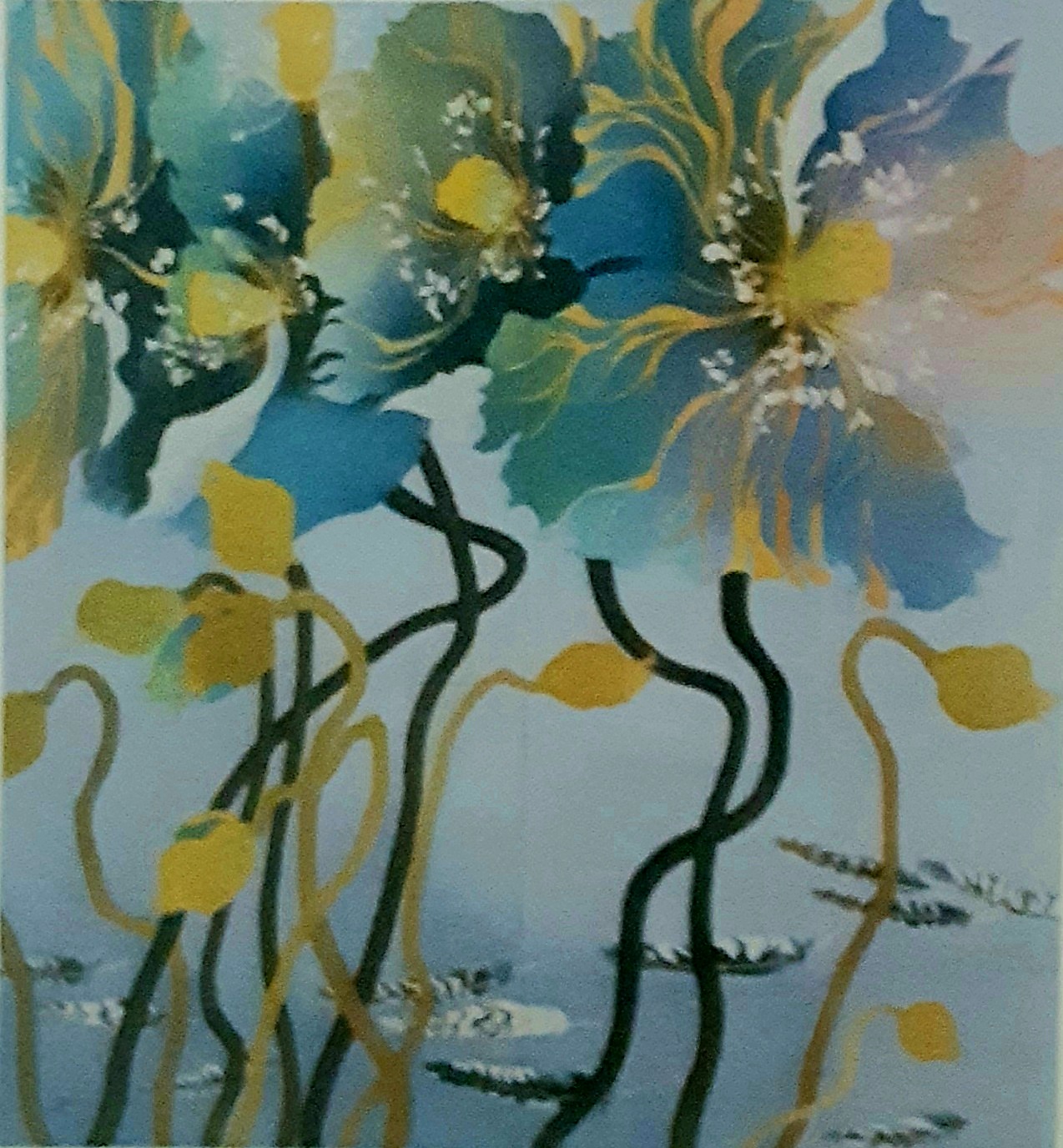
Contemporary Rozome: Technique & Artistic Expression
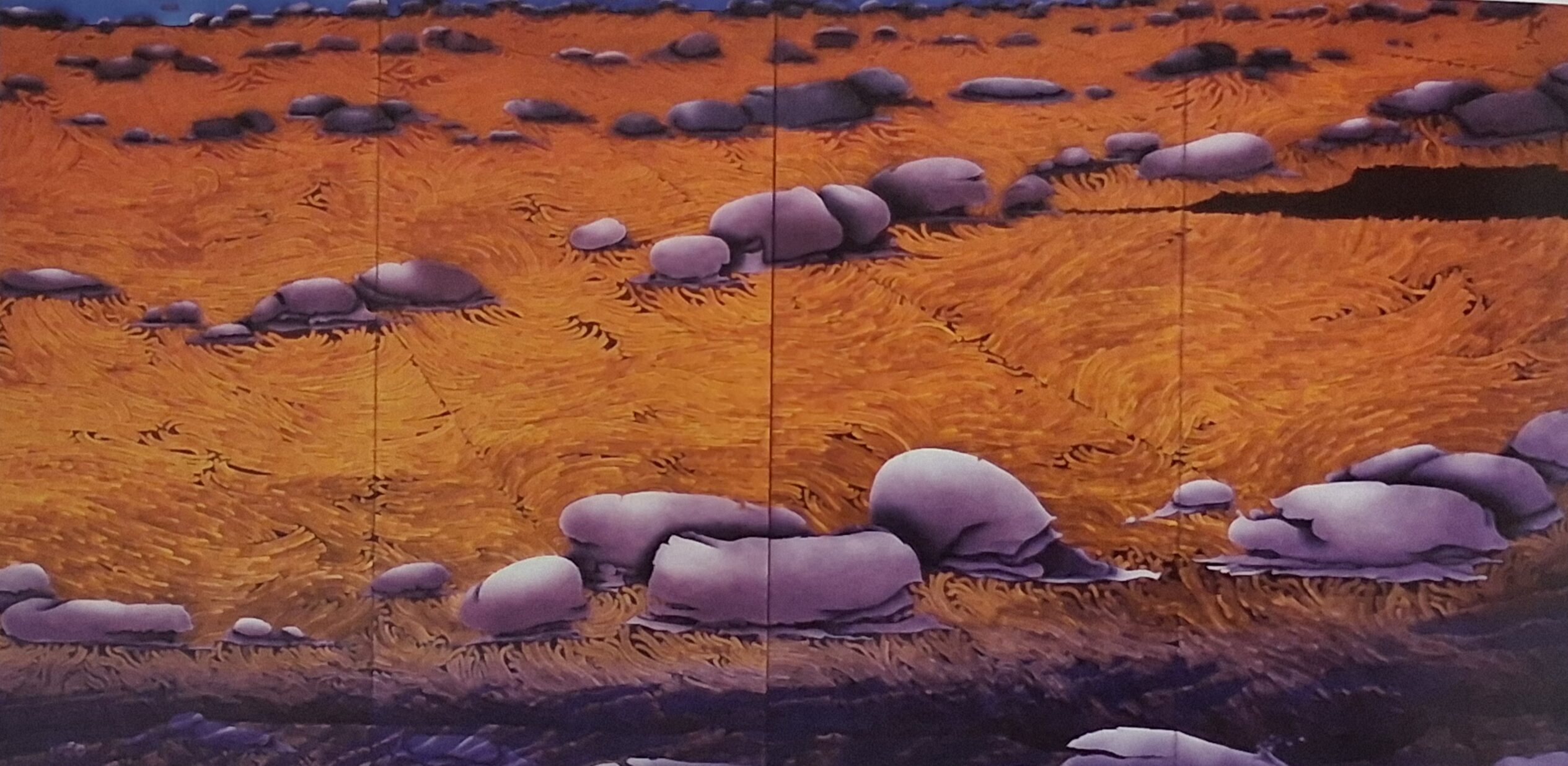
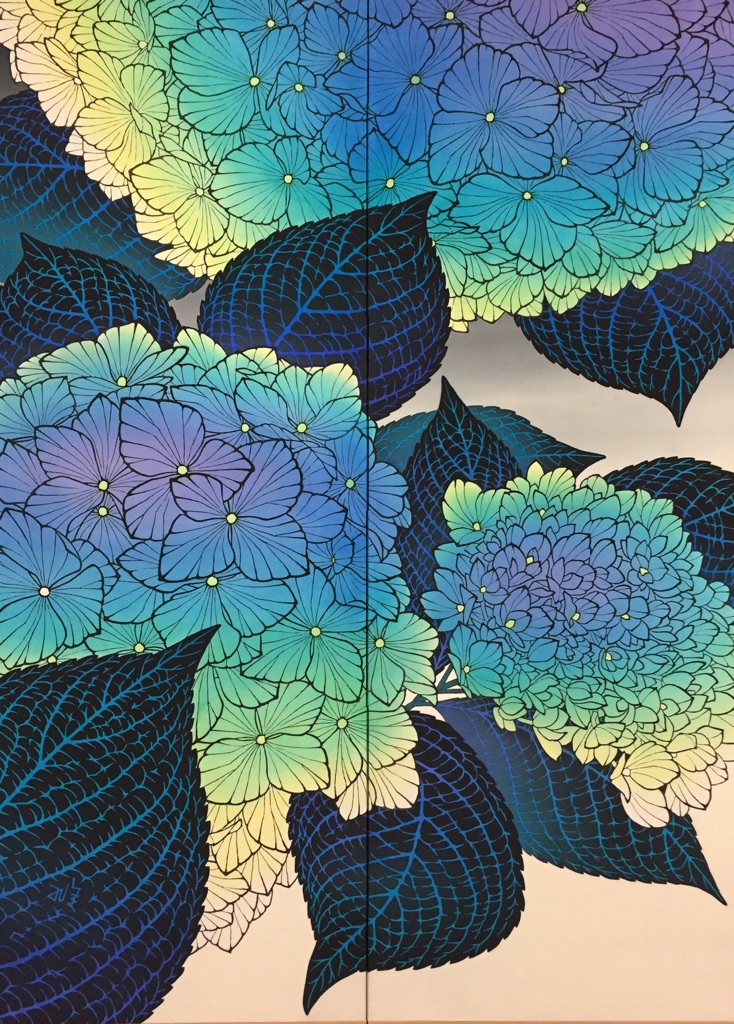
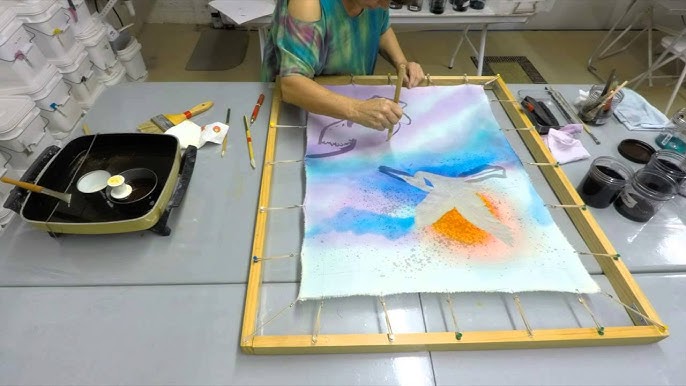
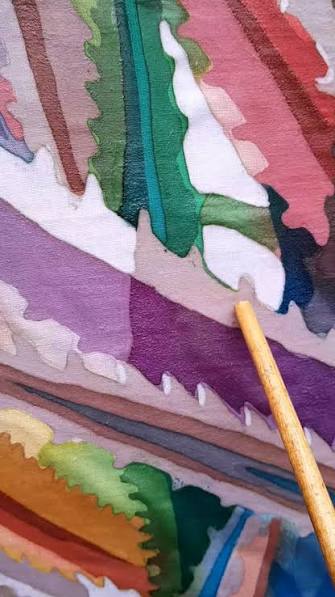
The contemporary artists who work with rozome have a strong interest in composition, color, design and painterly styles. They produce both huge folding screens twenty-feet long as well as dazzling kimono for the Japanese population. While rozome and traditional batik have many similarities, rozome differs in specific ways. The Japanese artists use brushes primarily for both wax as well as dye-application producing a fine controlled technique. The linear white line of Indonesian tjanting tool or repeat patterning of tjap stamping tool are rare. Also, the dyeing technique of rozome often includes a refined luminous quality attained by brush-dyed bokashi rather than the flat, saturated color of the dip-dye technique. However, recently some artists have have expanded wax-application techniques to include stenciling, stamping, etching and rolling wax on cloth for textural effects.
Rozome as Fine Art
Contemporary rozome artists are delighted to have these rozome hanging screens accepted within Japan as fine art, exhibited in national exhibitions of painting and sculpture and respected as a valid technique for contemporary art. A touring exhibition of rozome art gave many an opportunity to view this unique form of batik for the first time as it traveled through out the USA at Massachusetts College of Art, Boston, The Textile Museum of Washington DC and Bellevue Art Museum of WA, all part of the World Batik Conference-2005.
Kiranada Sterling Benjamin