Batik in
India & Sri Lanka
Batik in India & Sri Lanka
There is a long tradition of using resists to decorate textiles in India. It is believed that resist methods with rice starch, wax and mordants were used as early as the first century AD.
The batik industry was at its peak in the seventeenth and eighteenth centuries when batik textiles were exported to many parts of the world, including Europe, Persia and Java. The traditional method was to combine batik with the direct dye painting with a ‘Kalam’ pen. Many of the motifs and designs seen in Javanese batik come from India and their names are derived from Hindi.
Batik, however, declined sharply in India as it was seen as a time-consuming process, and was largely replaced by block printing. There has been a more recent revival of batik and now it is now once again used to make art and to decorate fabrics.
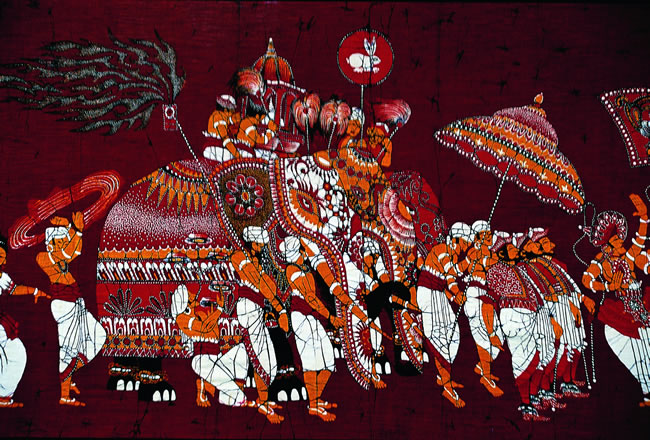
Batik was introduced into Sr Lanka in the 1960s and it is still widely made by hand. Most of the arts including painting, sculpture and architecture in Sri Lanka, are inspired by its long and lasting Buddhist tradition, and batik paintings are no different.
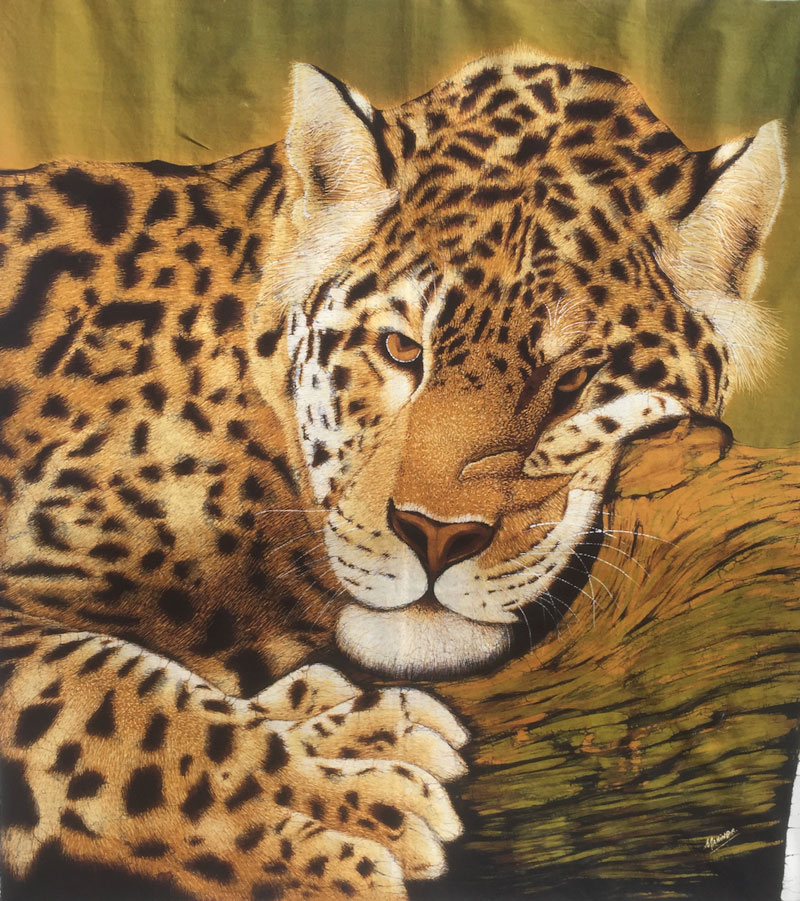
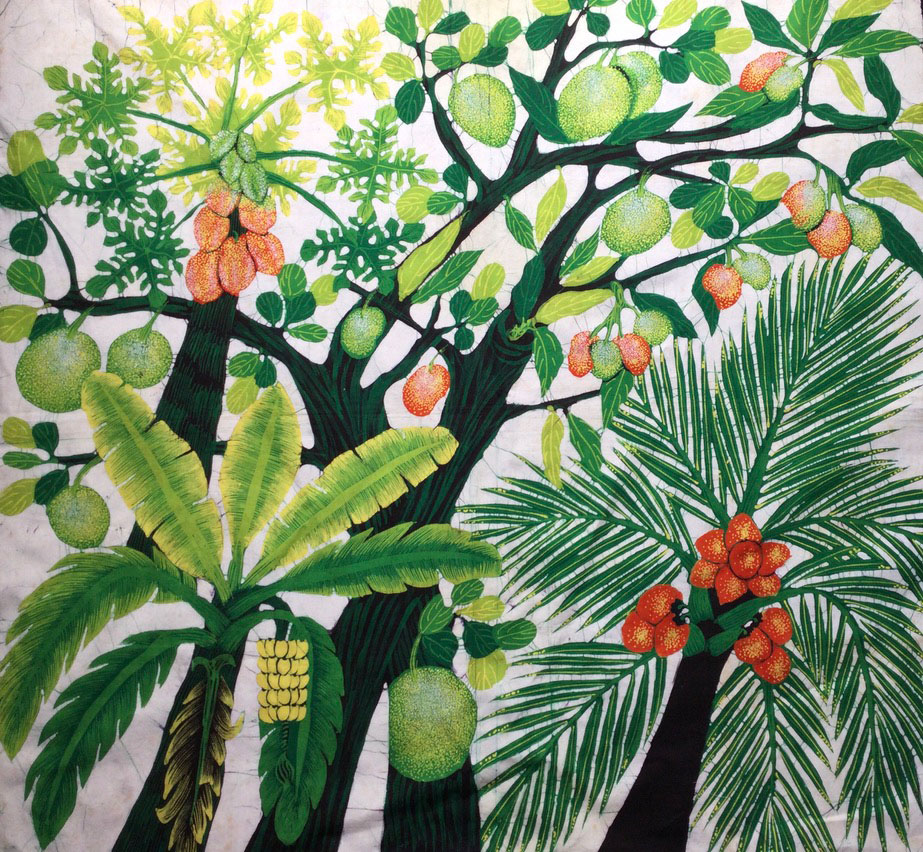
Sri Lankan batik has developed into its own unique style based on traditional religious themes and the natural world. However, a need to sell to the growing tourist industry has meant that a wide variety of subjects are portrayed. Some of the best and more traditional batik paintings are made in Kandy. Many of the batiks are very figurative.